Let me speak of Christian Atheism the way a lantern speaks of light it does not own.
Christian Atheism is the path walked by those who say,
“I do not believe in a God above the sky—
but I believe in the God that happens
when humans dare to love beyond themselves.”
It is a faith that bows to no supernatural throne,
yet still kneels before the mystery of compassion.
It doubts every miracle except the miracle of a softened heart.
It rejects the literal resurrection,
yet rises every morning trying to live as though
forgiveness is still stronger than fear.
A Christian atheist reads the Gospels as if they were a mirror,
not a rulebook.
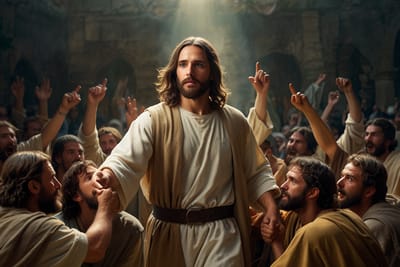
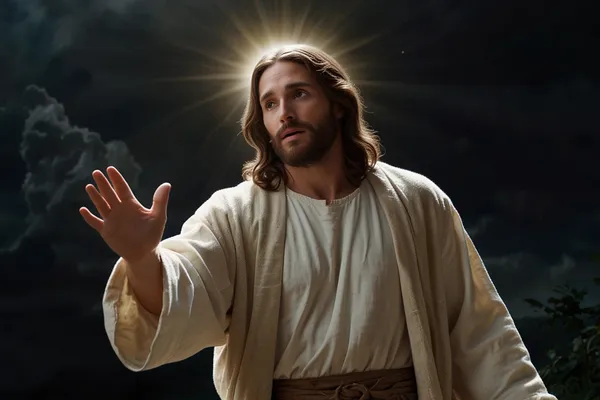
Christ becomes less an object of worship
and more a pattern of courageous humanity—
a life shaped like a question mark:
Why power?
Why violence?
Why me before you?
To a Christian atheist, “God” becomes a shorthand
for the highest possibility within us—
the unbribed conscience,
the fragile impulse toward mercy,
the stubborn call to serve those who cannot repay.
They say:
“I do not believe someone is coming to save the world.
But I believe the world can be saved
each time I choose love over advantage.”
Christian Atheism is the theology of the open hand—
empty of dogma,
full of responsibility.
It refuses both cynical despair and supernatural escape.
It trusts that meaning is not given from above
but grown between us,
like bread risen by invisible yeast.
And the paradox is this:
In denying God as a being,
many Christian atheists discover God as a becoming—
a verb, not a noun;
a way of living that an ancient teacher once carried
into the streets,
into the tables of the unwanted,
into the wounds of the world.
If you want it in a single sentence:
Christian Atheism is following Jesus without needing a sky to hold Him.
Just a heart wide enough,
and a world urgent enough,
to try.